

The following post, “I Don’t Like to Mince Words,” was originally posted in April 2024.
I don’t like to mince words. Nor do I like exaggeration. I weigh what I say, hoping that I’ve kept it real and to the point. So, when I say I’m exhausted, I’m really exhausted. This trip to Burundi has been fulfilling, profitable, and heart-wrenching. My emotions have been all over the place because of what I’ve seen and heard at our Hope Center (community feeding site).
My feet hit the ground running when we arrived last week. Office work called my name. Meetings were scheduled while we struggled to find enough fuel to keep going. Burundi is in a perpetual state of fuel scarcity and inflation. The lack of fuel was not new news, but the current level of scarcity is astounding. The usually bustling city is straining under the ripple effect of fuel shortages. This is no exaggeration because you know that I don’t like to mince words.
The highlight is at the Hope Center
The highlight for me of our visit, of course, is spending time at our Hope Center. There’s little that drives me more than handing out food to the hungry. I know that when we look at the “bigger picture,” it seems that a plate of food doesn’t mean much. I’m here to argue the fact that one plate of food does make a difference. Last year, for example, at a clinic in Malawi, I ran into Amos, one of our translators. Amos was one of the first children we fed at our feeding site in Malawi. He testified that his life changed with one plate of food (for his story, click here).
All of our outreaches are special. There are beautiful people behind the numbers. I remember when we began our work in Gatumba during the Covid-19 pandemic in 2020. The site, though a church, had yet to be renovated to host a feeding program. Hunger hit the country without mercy as the borders closed due to the pandemic. For months, people struggled more than usual to have even one meal a day. The ones who suffered the most were children, the sick, and the elderly.
God doesn’t mince words either
We partnered with Hand of Hope to purchase food packages for the most vulnerable in Gatumba. This was no small feat, given the difficulty of sourcing food at the time. But God blessed, and for several months, we handed out food packages. During our first distribution, an older woman, visibly unwell, caught my attention. She was seated, waiting to be served, and trembled violently. She was painfully thin and alone. I asked one of the team why she was alone and was told people feared that she was demon-possessed. She was an outcast.
I called one of our helpers to load her package onto a “bicycle taxi” (you guessed it: a bicycle used to transport goods and passengers) and get her home. God apparently had His eye on this lady. I later learned her name is Dahlia, and I couldn’t get her off my mind. I could have used the excuse that it’s impossible to help everyone.
Of course, I can’t help everyone, but there was one in front of me who I knew was there on purpose. I knew that if I didn’t find a way to help her, I’d be accountable to God. I don’t like to mince words, and neither does God. His orders were clear: find a way to help. And so we did.
Taking a risk
I took a risk and sent Dahlia to the hospital. Why was it a risk? Because resources are scarce, I left the risk with God. He had to sort it. As it turned out, Dahlia was diagnosed with Parkinson’s. Armed with a diagnosis, we purchased her medication and witnessed a miracle. Her symptoms eased, and her life changed. Dahlia, who was sent to the city by her family in the mountains with two of her granddaughters, was no longer an outcast.
Dahlia’s living conditions were terrible. She lived in a plastic tent with her granddaughters because of the yearly floods that regularly wreak havoc on the people of the region. We moved her into a better home, met her basic needs, and helped her start a small business. In no time, Dahlia was paying for her granddaughters’ school fees and for her own transport to church each week. All we did, and still do, was pay for her medication, which is expensive by local standards.
An encounter with a hippo
This past Sunday, when we were in church, I noticed that Dahlia was missing. I asked the ladies if anyone knew where she was, and no one had an answer. The next day, Dahlia called one of our leaders, saying her house had been flooded again by the recent rains. I sent word to have her meet us at the Hope Center the next day. While the flood waters have inundated nearly all of Gatumba, they are still about 50 yards from us. I hope and pray the rains subside!
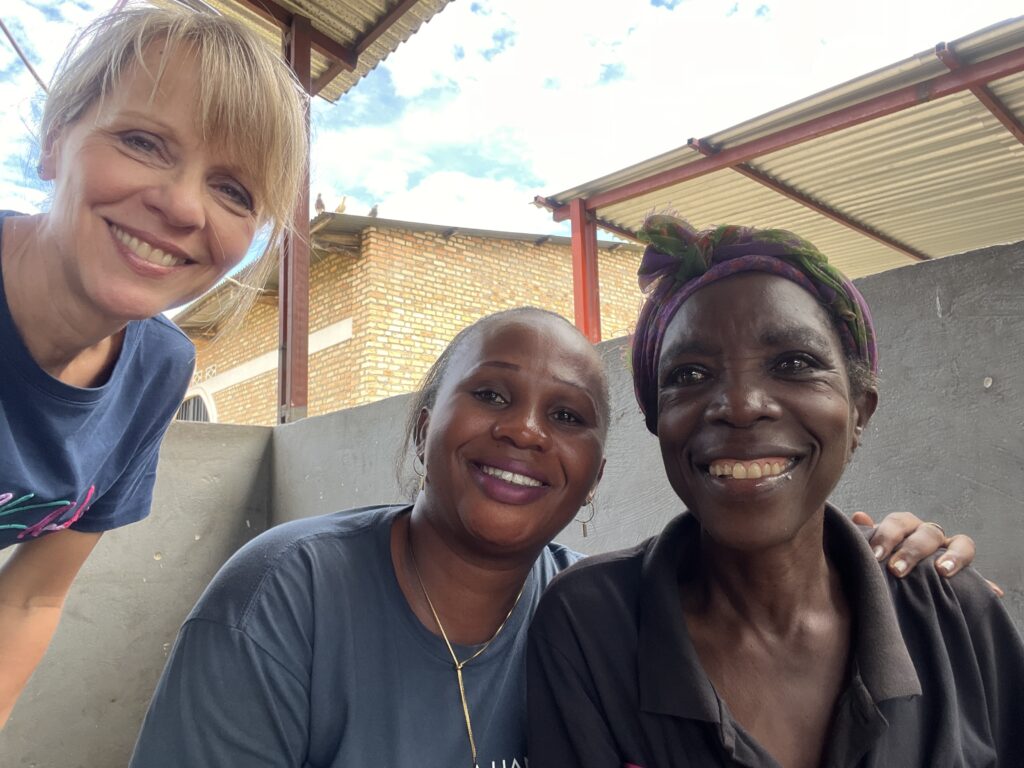
We met Dahlia on Tuesday. She was obviously tired but happy to see us. She told us a harrowing tale of the night before, when a hippo (yes, hippo) entered the house she shared with her granddaughters and friends. The house had partially collapsed during the floods. Everyone was sleeping on brick beds they had laid to create platforms above the waterline near the metal roof. The hippo thrashed about in the house. Dahlia and her granddaughters escaped thanks to the neighbors making noise, which eventually scared the animal away.
No exaggeration
It’s no exaggeration to say that the people in the flooded areas around Lake Tanganyika are currently facing multiple threats. Hippos are very dangerous, killing some 500 people per year in Africa, and there are many of them living in the lake. There has been a sharp increase in water-borne diseases, as well as reports of casualties when people encounter crocodiles, hippos, and venomous snakes. When I say venomous, I mean venomous. I don’t like to mince words, you know. Here in Africa, we have cobras, mambas, and vipers.
But Dahlia has taken all things in stride. She’s now receiving her meals at the Hope Center while we search for a place for her and her granddaughters to live. It seems like an impossible situation, and it may be impossible to the natural eye. But when we work for the Kingdom, nothing is impossible.
I don’t like to mince words. I woke to rain clouds today
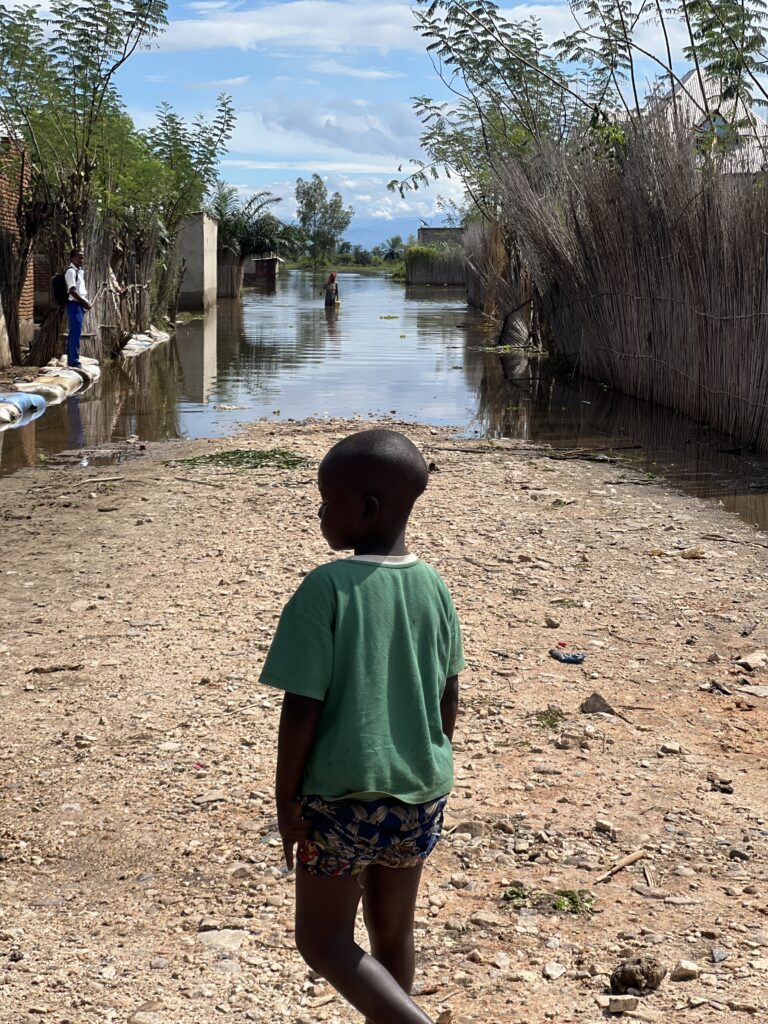
We’ve had two days without rain, and we are grateful. However, this morning I woke to dark clouds hovering over the city. Pray with us that the rains cease and the waters subside. There are tens of thousands of people in the lower-lying regions around Lake Tanganyika who have no choice but to remain where they are. No emergency aid is coming to help them. We will do what we can and trust God to do what we can’t.
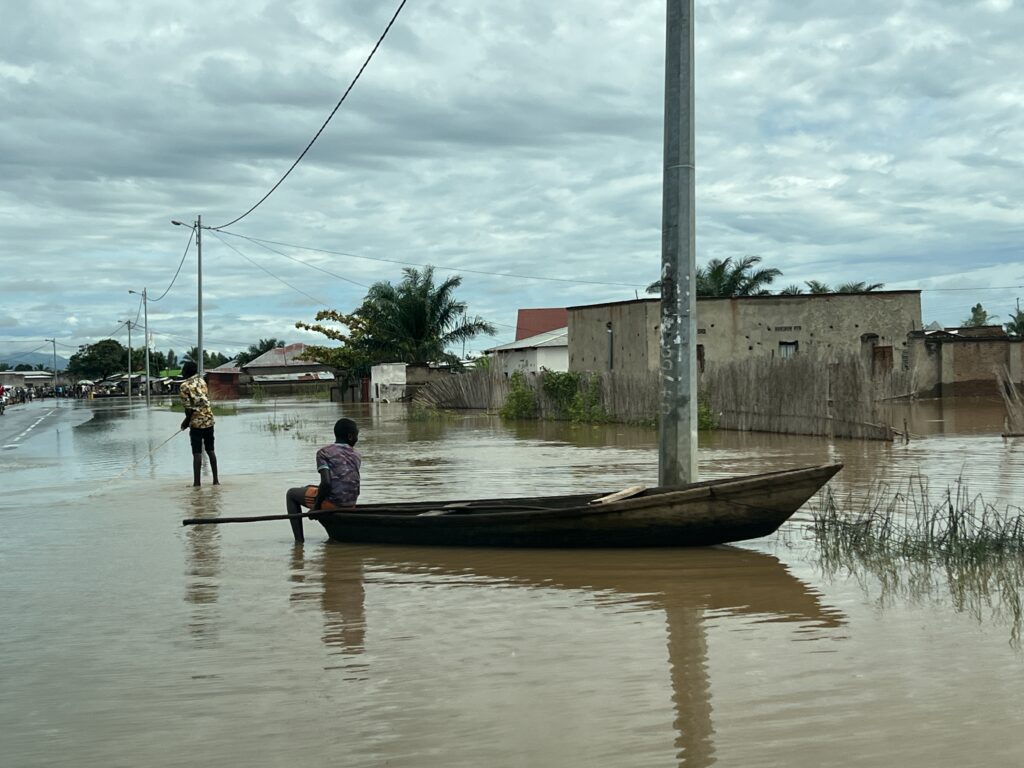
I’ve not written this to depress you or make you feel hopeless. I was very thoughtful as I wrote, because I don’t like to mince words. My intention is to introduce you to one of the names behind the numbers of those suffering during this time. Dahlia and her granddaughters are among the thousands whose lives came to a halt these past weeks. Yet her smile warms my heart. She’s going to be ok. We’ve also housed about 50 individuals in temporary housing while we wait for the waters to recede, and they will recede as the rainy season ends. Once this is over, life will resume until the clouds gather again next year.
If this post encouraged you, you’re welcome to partner with me on A Cultural Shift through Buy Me a Coffee. Your support helps keep A Cultural Shift’s outreach going. Thank you.

Pingback: Honestly, I’m not sure why it’s necessary - A Cultural Shift
Pingback: It's hard to keep my mouth shut - A Cultural Shift